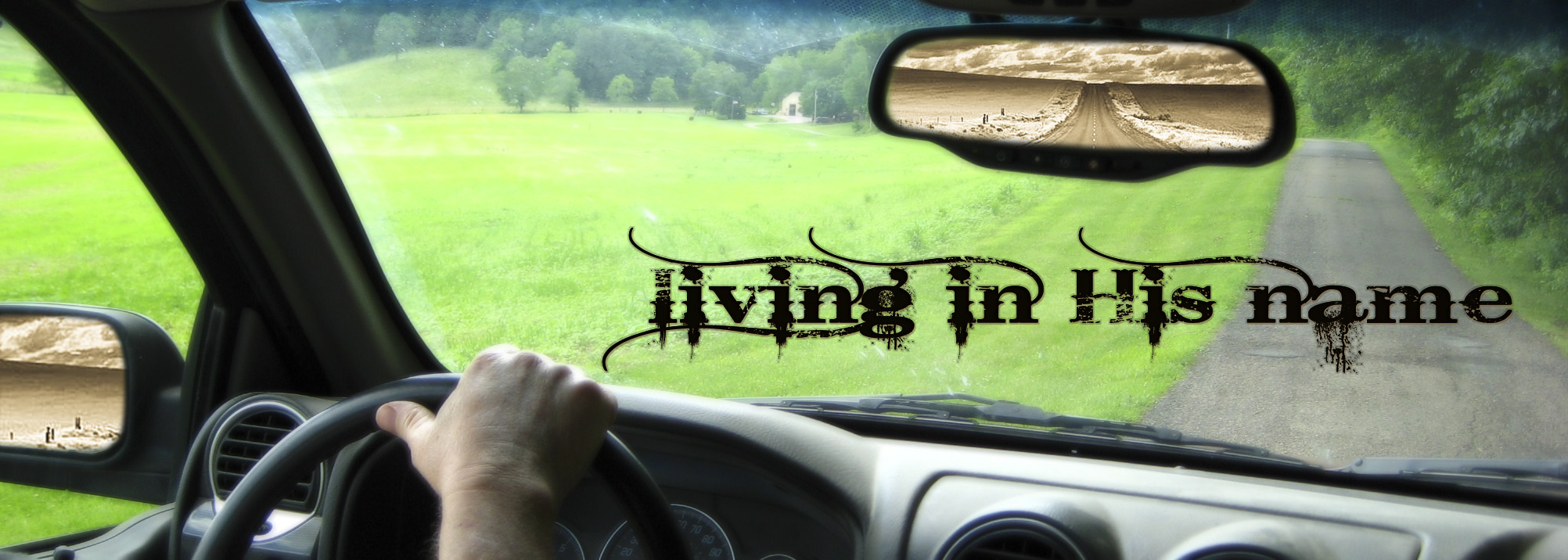
“Always expect the worst, then you’ll never be disappointed.” You ever heard that? It almost makes sense doesn’t it? Almost, but not quite, there’s something wrong with it, and most of us feel it in our bones. For me, there is no hope in the saying, “never invest and you’ll never lose anything.” Of course, but you’ll never gain anything either and that is conveniently left out of the proverb. Even so, many of us find ourselves thinking the “worst case scenario” without even trying.
It is a fact that bad things happen to good people, but it is a greater truth, always, that God is good all the time. It seems a more than reasonable question then, how many of us somehow think bad things happen to good people, but how good of a person do i have to be in order for bad things to not happen to me?
As people who keep company with God we should always live in a constant expectation of God, but because we live this life in the flesh, what we should do and what we really do are sometimes two different things. While giving the sermon one Sunday, the minister said that all of sudden he heard words in his spirit which caused an instant impact, and then there followed a stream of undeniable miracles. The words were; ‘In the Kingdom of God, anytime, anywhere, something good can happen to you.” “Something good can happen” is a phrase filled with positive expectation.
i believe expectation is a projective-type thought, picture or aspiration of what you are looking forward to, and i mean “looking forward to” in the sense of things to come, good, bad, real or imagined. Expectation – the anticipation of becoming and overcoming.
i’ve heard it said “expectation is disappointment waiting to happen”. Well, not always. If i expect a great profit from an investment that doesn’t happen, that’s very disappointing of course, but i, personally, maintain the expectation of the return of Jesus Christ, and i guarantee, i will not be disappointed. In that example, it’s easy to see the little proverb isn’t always true, and could easily have just been something Eeyore said.
We can’t throw out expectation because of fear or negative thinking, it is actually a valuable commodity as long as it’s turned in the right direction. What we envision for ourselves as the things which are up ahead in our future, they become a subtle target, whether they’re good or evil, bright or dismal. It is what we believe might happen to us in the future, both near and far, and we often give it weight to change our choices. i fully believe we are all moving in the direction of our expectations, even when we do not realize it, even when we don’t want to. In light of that, i suggest that our direction is largely not dictated by the circumstances around us, but more by our expectations which we picture and imagine for ourselves in the present and future.
What we believe rules us, we don’t rule what we believe. Some feel they are always standing on the high cliff of expectation, just waiting on the long fall of disappointment. Friends, i’m here to declare that God has given a better platform for us to stand on.
i’m Social Porter and this is Outposts, cool jazz and contemplative conversation, hoping to speak to folks about 3” below the surface of their presentation face, where they really live. Come go with me, the clock is ticking, the sun comes up and the sun goes down, days go by and we must be present and in the room of life with Christ, our hope of glory. Tap your toe and dream a little, i’ll be right back.
Expectation is parallel with hope in the bible; it is what you hope for, and we must remember that our faith actualizes our hope. Having expounded a little on the idea of expectation, it isn’t surprising that many expect negative things to happen to them, often. That is called “dismal foreboding”, and it’s a type of expectation. Sort of like “Hope” is a positive expectation, “dismal forebodings” is a negative expectation. Looking at the negative experiences that happened to someone or the crisis they faced, sort of conditions us to expect the same predicament for ourselves, especially when the circumstances are very similar. i’m glad we all have things happening in our lives, but people’s experiences, even believers, that are not in line with God’s word, are not our standard, the word of God is our standard. Our experiences typically differ, people’s responses vary, and each person is as unique as a fingerprint, but God’s word endures forever.
Now, right here, i’d like to address, in short, the power of words from our mouths, and words spoken even in secret. Firstly, secrets have a way of not staying secret. Ever noticed that? A great proverb is from Ecclesiastes 10:20, my paraphrase here, “Be careful what you say, even in your bedroom, for a little bird will go and tell it and everyone will know.” We need to know the power of our words, but that doesn’t mean we shouldn’t call things what they are. There’s this crazy doctrine out there that says i can’t even say i have a cold. i’m told it gives power to the illness. On the other hand i have seen people who tell themselves they are ill so often they eventually become ill, and that’s where the dismal foreboding comes in. What i’m talking about though is the same people who tell me i shouldn’t even admit i am running a fever, are also taking medication for high blood pressure, diabetes, a general anxiety disorder, or worse. Well, what happened to refusing to admit there’s a problem? How do we get rid of or treat maladies if we don’t call them what they are? There is a line of reasoning that gets crossed when we strain so hard to advise others on the power of the tongue and then cross over into “wish craft”, spelled, w-i-s-h craft, assigning our words more power than there is. If i say my feet hurt, the fellow next to me quickly says, with a rebuking tone, “Don’t say that, it’ll get worse! Stop cursing yourself!” That’s turning the power of our words into “wishcraft”, for, i’ll ask again, how do we get rid of stuff if we don’t call it what it is? You know, if my feet hurt, they hurt, and calling it what it is, that’s being honest, and to always fear and be on guard for what might be said lest we curse ourselves, well now, that’s an invitation for “dismal forebodings” from another angle. Always worrying that i’m cursing myself and the fear of repercussions is a dismal foreboding, it is still fear and trembling about what might happen. You do what you need to, but i’ll have no part of wishcraft, it should have no part in our lives. And to balance that, there’s enough scripture to substantiate the power of our words, because it is also true that if we tell ourselves loud enough and long enough we are sick, chances are good, we’ll eventually be sick. Either way, they are both a dismal foreboding which should be allowed no grip on us.
Psalms 27:13, “I would have lost heart, unless I had believed that I would see the goodness of the LORD In the land of the living”.
Have you ever heard of phobophobia? Bizarre sounding word, huh? It is being afraid of being afraid, having anxiety about possibly having anxiety, it’s being depressed because we might get depressed. It’s a compounding of something that was already going on, like feeling stupid about feeling stupid and now you feel real stupid, or being angry about being angry, and now you’re just raging angry. It reminds me of a ride at the fair when i was a boy called the “Octopus” where the riders were slammed to the outside as their seats spun to the outside, and then slammed to the inside as their seats when they were spun toward the center of the ride, all in a sling-shot motion, slammed to one side then slammed to the other, back and forth till your stomach just churns. And, yes, i have been one of those people who, when slung hard to the outside of that fast spinning fair ride, i have been one of those who’s stomach contents needed to exit my body, fast.
Interestingly, those in the throes of pending calamity suffer phobophobia, pounded by fear and then pounded by the fear of having fear. The symptoms of many other anxiety disorders, like panic attacks and generalized anxiety disorder often exist in the grip of phobophobia.
But listen to this, And we know that God causes all things to work together for good to those who love God, to those who are called according to His purpose.”, that’s from Rom. 8:28. Do you believe that? i mean really, really believe that? We quote the verse when things are upside down in our lives, when there’s a contrary wind blowing, and our thinking just goes back and forth never settling in a decision. We tell people we believe it but our behavior often speaks a different story. Why don’t we question ourselves about our unbelief? It’s not a hard question, we just don’t do it. Are we afraid of the answer, afraid someone will find us out and we may not be like we hope others see us?
It is the spirit of faith that sees the good answer which may still be invisible in bad circumstances. “… all things, all things, all things work together for good to those who love God, to those who are the called according to His purpose”. “All things” means all things and God is not simply using those words to make us feel good, He’s giving us something to grip to in times of trouble. The firm expectation of good is anchored in this scripture and encourages us to not be entrenched in the firm expectation of bad – that would be dismal forebodings.
How long will our bitterness over what did NOT happen in our lives prevent us from extending our hands of prayer and healing to others? When our expectations don’t happen and we’re so very disappointed, isn’t it really self-centered to refuse to give to others because we’re mad at God for what did NOT happen? And then we brood around, moody, burdened with anxiety, just straight out refusing to even listen to the stories of healing and redemption because that’s not what happened to us.
These calamities which seem to easily beset us, these preoccupying dismal forebodings that swirl around in our minds, worrying because we’re worrying, scared because we might be scared, they’re like pot holes in the road, and we have to learn to swerve around them on the way to where ever it is God is taking us to.
When i was a young man, the town i lived in was very rural, and once you got out of town most of the roads were dirt with a serious ditch on each side and very little shoulder for mistakes. We had pot holes and cracks in the roads you could get lost in … they could be anywhere and there was no notice of one around a corner. My brother wrecked his car because of a huge pot hole. He hit the hole so hard it blew a tire, bent the front end, and he ran into the ditch.
Calamity comes to everyone, regardless of how mature you are in Christ. How learned you are or how prepared you are, calamity, like pot holes and wash boarded roads, they are on everybody’s path to where God takes them. Rather than being swept aside by calamity and allowing downward spiraling expectations to control us, maybe we should get better at driving around them, learning to navigate them better. We can’t live in “wishcraft” saying “by faith the holes in the road aren’t there”, because the truth is, they are there. We must wake up and learn to drive better.
When dismal forebodings (foreboding being a feminine noun) comes to visit at your house, maybe at first you let her in. She visits a while, you entertain a dreary dismal conversation, she complains about the tea, and you wonder why you ever let her in the door. Suddenly Ms. dismal forebodings picks up her cell phone and calls her very close friend, Mr. Calamity (a masculine noun), and asks if he wants to come over and join the party. You are whispering “no, no, no”, but she continues on in her invitation totally ignoring you. Shortly there’s a knock on the door, and there stands a disheveled looking fellow with unkempt hair like he’s been in a wind and dust storm both. Before you can close the door, he just barges in, hugs Ms. dismal forebodings, with great dust clouds rising and settling in your house. You’re thinking, what a terrible mess i’ve made for allowing either one to come in the door, and you think maybe you can just shuffle them off to their own rooms for the night. They each retire for the evening, and as you lay in your bed you can hear Ms. dismal forebodings whispering thru the walls to Mr. Calamity. They’re talking about how terrible things might be ‘if”, and “shouldn’t have”, “wouldn’t have”, and “might-have-been-if”. They’re speaking fearful things which grip your heart, and you weep to yourself saying, why, oh why did i ever let them in, much less allow them to spend the night?
When hunger overtakes us, it becomes the focal point, and if you’re hungry long enough it becomes an all-encompassing thought. If hunger overtakes us on a national basis, not only does it become the focal point, but it begins to be reflected in art, science, and education as a start. We see scientists searching for food sources, art reflects the starving living and images of the dead, schools teach classes on food economy, the calamity of hunger invades all we do.
When all we hear and see is calamity, we begin to focus on what did not happen to us, what God did not do for us, and it all becomes so intense it overtakes us, and there comes that sour bitter taste about what did NOT happen. When the wounds which won’t allow us to go on just envelope us, becoming the focal point, it colors everything and shades our thinking, influencing our very thoughts and words. Again there rises bitterness invading all we do, eventually becoming a huge drag on all our spiritual momentum. As the days go by, our internal and external calamity and dismal forebodings become our personal national anthem every waking and every sleeping moment.
i met an elderly woman named Gladys. When i first saw her she was laying on her bed, her eyes shut and the sheets pulled up. It was a beautiful spring day and everything was blooming. i thought maybe she was dead, so i spoke to her in hopes she had not left us yet. From the pale, frail person under the sheets, there rose a thin dry voice with sadness saying that she was still here. i asked her what she meant and she said she had seen everything of this world she wanted to see, and lived through everything she wanted to live through, it was all the worst she could imagine and she was just done with being here. She said she was just laying there waiting to die. i suggested it could be a while, after all, as best i could see, she seemed in pretty good health. She replied she didn’t mind, she didn’t have anything else to do and she was willing to wait right there. Within a couple months i received word Gladys had died. i asked how, and they said it was simply a failure to persist. The dismal forebodings and whispers of calamity ultimately robbed her of her peace and life.
Prov19:13, “A foolish son is the calamity of his father: and the contentions of a wife are a continual dropping.” The Hebrew word “calamity” is plural just like in Psalm57:1 where the translators called it “storms (plural) of destruction”. “Calamity” seriously paints the picture of multiplied and diversified sorrows, and then there’s the other part, “continual dropping”, that irritating, unceasing, sound of dripping, and dripping, drop after drop, of water through the chinks in the roof. The Hebrew word for “water” in this verse is about a “sweeping storm” and the water blows in through the roof. That is a picture of calamity and dismal forebodings. i think dismal forebodings and pending calamity, for many, seem to come in multiples and it just pounds and pounds until we cry out to God or we capitulate fully into anxiety and fear.
There is a defining moment in the midst of each of our dilimma’s to be had, if we’re interested. If we have calamities pounding on our hearts, and dismal foreboding is our constant companion, we are choosing. It doesn’t have to be, we absolutely do not have to dwell in all that downward spiraling thinking, which does no one any good.
Honestly, so many things on the internet and news enthusiastically play into us learning to live with calamity and dismal foreboding, ugh! What a thing to learn! Watching someone fall down is funny, maybe, one time, but to watch video after video of some young guy falling and being crushed across a hand rail, or watching a young woman shame herself or fall down over and over and over, simply put, it is not funny. Watching the bombs of allies blow up an enemy is one thing, but when it’s video after video, over and over, until it is no longer about winning a war, but about the blood lust which rises in us, not to mention we are becoming desensitized to violence, it’s not funny anymore. Years ago to watch any of the violent videos available would be abhorrent and we would turn our eyes away. But now, we watch and laugh. It’s …. not….. funny. Is it the thrill at watching the demise of another human, making fools of themselves, shaming themselves, or wounding themselves?
Here’s the sticky statement: We can only watch and hear just so many violent calamities, and dismal forebodings before it begins to stick to us and we begin our own submersion into a downward spiral and negative expectations. It’s not funny.
Romans 8:32, “He who did not spare His own Son, but delivered Him up for us all, how shall He not with Him also freely give us all things?”
i take special note of the verb tense that is used here….Paul didn’t write “how has he not with him also freely given us all things,” but goes further than past tense saying: “How shall he not with Him also freely give us all things?” The last part of this verse speaks of something more than what has happened in the past, but also should give us reassurance and confidence for the present and for the future. The “shall” in that verse has no time-limits, no implication of limitation. i read it as meaning that both now, in the present and forever and ever in the future the Lord shall manifest Himself as the great Giver. i like that, “The Great Giver”. This scripture is a wall of defense against dismal forebodings, and it chases the shadows of calamity out of our houses and away from our doors.
Then what exactly would the Lord withhold from us? Here’s an idea, we often desire things which would come between ourselves and God if they were given to us, therefore the Lord in His faithfulness withholds them. i think that makes sense. Would you give your child gifts which would endlessly wound them and drive them away from you? No. Neither does the Lord.
I don’t want any one of us to walk around one more day sinking deeper into the mire of doom, gloom, and hopelessness. The Hebrew word for hope means to trust with expectation, and that is good expectation, not the downward spiral of dismal forebodings. Hope means we have an expectation that something is going to happen to change our circumstances, or an expectation of overcoming and becoming. Jesus died and rose from the dead so we would have the power and authority to rise above the downward spiral of the world. With Jesus comes an anticipation of overcoming and becoming.
Psalm 18:18, “They confronted me in the day of my calamity, But the LORD was my stay.” The back story is that God frustrated all the designs of David’s adversaries, and prevented him from falling into their hands. And to look deeper into the construction of the Psalm, the Hebrew for “stay” in that verse primarily means to lean on something or someone, as on a staff, an arm or hand. The root of “stay” is a verb used metaphorically of an attitude of trust, hope, or to trust with expectation. In Proverbs 3:5 we are told not to rely on our own understanding, instead, we are to trust the Lord.
Calamities bring no hope. Dismal forebodings are anti-hope, anti-trust, anti-life, anti-righteous expectation. Let’s not play over there. Rom15:13, “May the God of hope fill you with all joy and peace in believing, so that by the power of the Holy Spirit you may abound in hope.”
When sweeping storms come, Jesus is our rock, our stanchion and stay. Friends, remember the clouds are only for a season. Beyond the clouds and storm is blue sky and sun shine, but if all we see are the clouds, wind and rain, we’ll easily get swallowed up. If you’re always looking down, all you’ll see is the ground. Set you eyes on Jesus, the hope of glory, and let God train you to lose sight of this world. In the world without Jesus, there is truly nothing good for you here. Think about it.
Zechariah 9:12 says, “Return to your fortress, you prisoners of hope.” i intend to be a prisoner of hope all the days of my life. I like the phrase “prisoners of hope.” Think about it, nobody wants to be a prisoner of anything, yet we are often held prisoner by the future tripping fear of calamity and dismal forebodings. So i figure if i’m going to be a prisoner and i’ve got a choice, which i do, then i’d prefer to be a prison of hope, and prisoner of love, and a slave to righteousness. i’m confident that anyone who’s ever been a prisoner will agree, if you are presently a prisoner, you feel as if you have no choice about it. But hope holds the keys to your fenced in area, hope doesn’t allow anyone to be negative about it. When the storm is thick and the rain is running in under the shingles, hope will cause you to rise up in faith and say, “Lord, you are all you said you were, and I praise You and believe You’re working in me and know exactly the longitude and latitude of my position. All my faith, trust and hope are in You!” Hope never surrenders, hope doesn’t allow us to get swallowed up in the swell of dark thoughts, and i believe, the Lord’s heart is that we all are prisoners of hope, and that all things are possible with God. i say, if we’ll be steadfast in our hope, we are always more than conquerors.
Hope, what an amazing thing. Hope is the anticipation that something will happen to advance our position or improve our life. It may be a positive hope as in, I hope someone drops off some food, or it could be a negative hope as the serial killer sits in his secret place in hopes his victims will be easier to get. Either way it is Hope. Everything born seems to be born with some version of Hope. Animals in cages despair, birds die in cages often from despair, people die in nursing homes due to despair, a loss of hope, and they enter into what is called a “failure to persist” .
So, it seems, hope is given, on some level, to most all living things in some capacity or another. For Christians primarily though, hope is the anticipation of becoming and overcoming. We all have hopes of overcoming our daily shortcomings. Everyone is going in the direction of their expectations, whether they know it or not, they are going in the direction of what they love and want.
Even though we make a face and posture around piously, what we really expect, love, and want is our true north. In light of that, what we think we pursue is often not what we really pursue. Think about it, no one persistently pursues what they do NOT want. So i ask you, what do you want? What do you expect?
The only thing I can think of is that hope must come exclusively from God, He’s the only one with the skill for it. Not only does God imprint everyone’s heart with the truth (murder is wrong, false witness is wrong, etc etc) but He also must give every person a big dipper full of Hope when they’re born because without hope people despair and fail to persist. We are born into a fallen world as fallen people, i was a dead man the day i was born, and everyone is looking for something. I don’t think anybody has hopes of being nobody. Even when it never looks like we’re going to get out of there alive, somewhere in our heart there is this little flame of hope that something will happen to change our situation. Even when it looks like we’ll never stop dreaming of the wrong things, failing, and falling down, somewhere in our heart is a little light of hope that something will happen to change the direction of the momentum on that thing that seems to eat us up so often. Hope.
I read somewhere that faith actualizes hope, and i think that’s true. Whenever I find faith I know hope was there first. And Hope and Faith go together like a tag team, like the two sisters Hope and Faith.
i’m Social Porter and this has been Outposts.
How would life look to you if you had no expectations? That would be horrible! Imagine how wonderful life would be if you owned right expectations, and weren’t co-habitants with calamity and dismal forebodings any longer. Ahhh, what a beautiful vision, huh?
Come go with me, it’s getting near time to go home. i want to be ready when Jesus cracks the eastern sky, don’t you? Be strong and courageous, pray for your neighbor this week and drive carefully. We’ll talk again next time, amen.